

About TRUETH
Jin Sun Do, the method
Ten martial arts disciplines taken back to their shared root, then rebuilt around what a dysregulated nervous system actually needs.
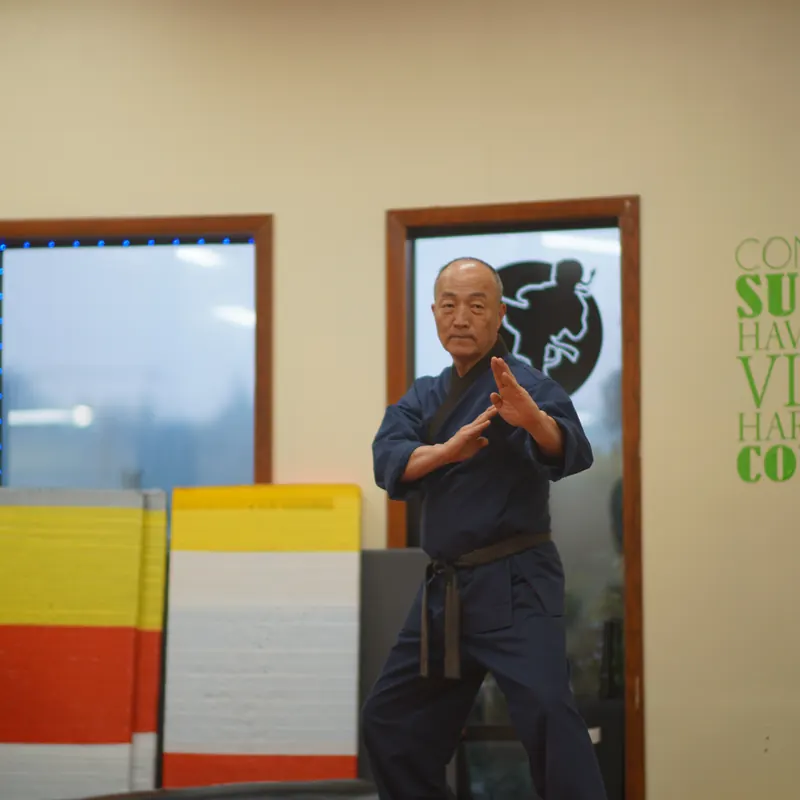
Most martial arts are taught as branches. Judo close and gripping, Taekwondo lower body and kicks, Kung Fu upper body and arms. Each was developed by a different country for a different kind of combat, and each keeps its own root knowledge close.
Grand Master Kim spent a lifetime taking those branches back to the root: why a movement was built the way it was, what the body is doing, and what the breath is doing underneath it. What came out is a set of somatic techniques paired with specific breathing patterns.
The ten disciplines
- Hapkido
- Aikido
- Kenpo
- Taekwondo
- Karate
- Thai Boxing
- Kung Fu
- Judo
- Ninjutsu
- Gumdo
Every session, three elements
- Structured breathwork, teaching the nervous system to settle. The skill transfers to the classroom, to a hard moment, and to the night before sleep.
- Martial arts movement sequences, building executive function, pattern recognition, physical discipline, and the satisfaction of mastering something real.
- Emotional literacy practice, learning to name what they feel and understand why, in a group where every child belongs.
Belts, and the Warrior Ceremony
Children progress through a belt system that creates repeated experiences of earned mastery. This builds genuine self-confidence rather than performance confidence, because the child knows exactly what they did to earn it.
Every cohort ends with a Warrior Ceremony, where children receive their warrior belt from Grand Master Kim in front of their families. For many, it is the first time they have stood before the people who love them and been seen for what they have become.
Last reviewed 2026-07-25